Bitter green tea? Your water is too hot. Here is the Japanese fix.
By the Koto Home Lab editorial team, based in Japan · Last updated November 27, 2026
As an Amazon Associate I earn from qualifying purchases. This costs you nothing extra and helps keep this guide independent.
If your matcha or sencha tastes harsh, the tea is rarely the problem. Water straight off the boil, at 212°F (100°C), pulls out the bitter compounds in green tea before the sweeter ones have a chance. In Japan, green tea is brewed noticeably cooler, and most kitchens solve the temperature question once: hot water sits ready, at the right heat, all day.
This guide gives you the temperature rule in °F, then compares three Japanese pieces that hold it for you, whether your day runs on tea, pour-over coffee, or both.
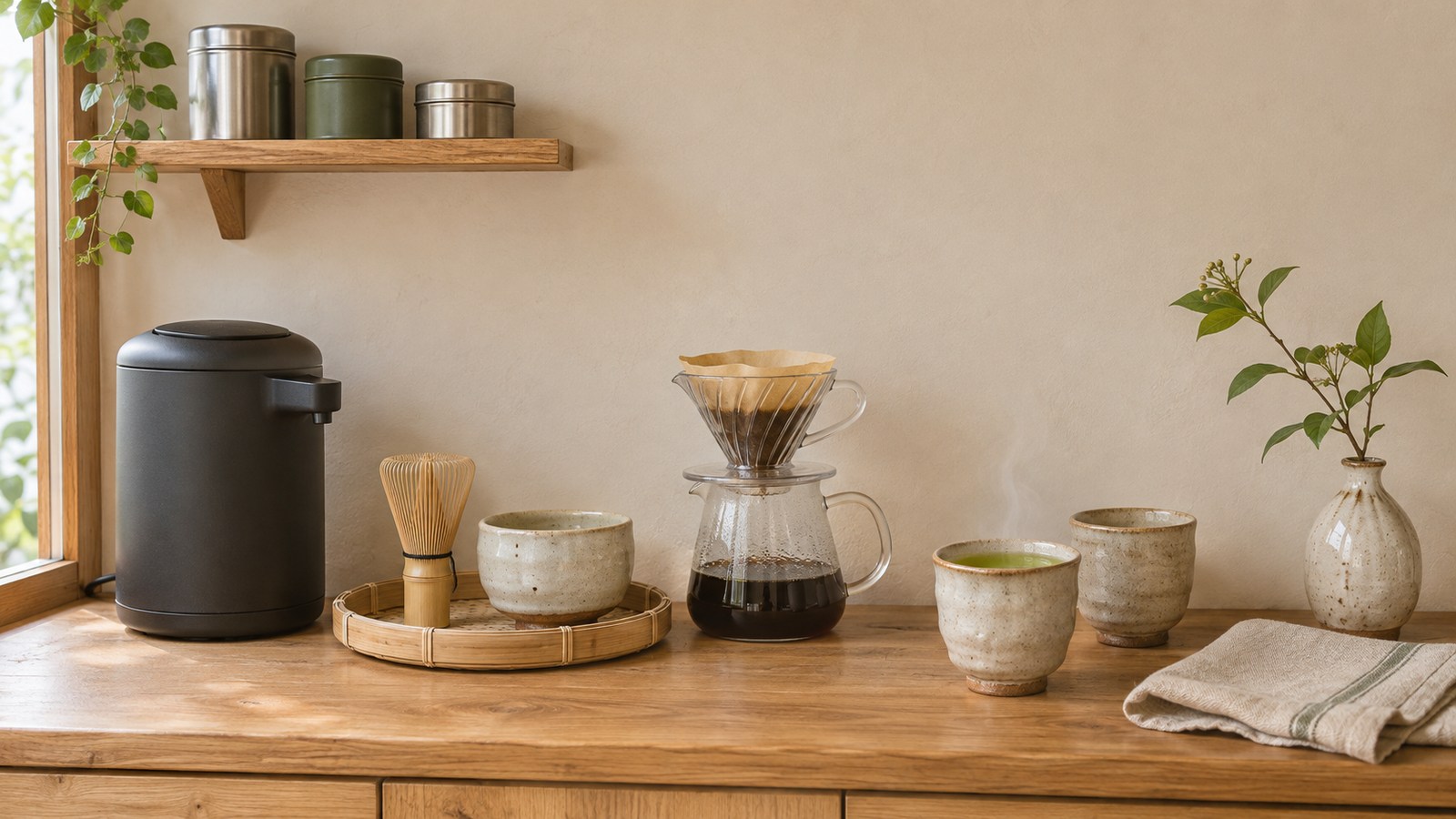
Illustrative mood image (AI-generated). Not a photo of the products below.
The simple temperature guide
What you are making
Water temperature
Why
Matcha / Sencha
160–175°F (70–80°C)
Cooler water keeps green tea sweet and savory instead of bitter.
Hojicha / Black tea / Pour-over coffee
195–208°F (90–98°C)
Roasted teas, black teas and coffee need more heat to open up.
A full rolling boil
212°F (100°C)
Fine for sterilizing and cooking. Too hot for green tea.
These are common starting points used in Japan. Always follow the directions on your own tea if they differ.
“Why spend more than a standard electric kettle?”
It is the fair question. A basic electric kettle does one thing: it boils. For green tea, that leaves you doing the temperature control by hand, every single cup.
With a standard kettle
Fill and boil to 212°F (100°C).
Wait several minutes, or pour between cups to cool it.
Guess when it has reached about 175°F (80°C).
Repeat for the next cup, and the one after that.
With a Japanese water boiler
Fill it once in the morning.
Choose a keep-warm setting: 160, 175, 195 or 208°F.
Press to dispense. The water is already at that temperature.
That is the whole routine, all day.
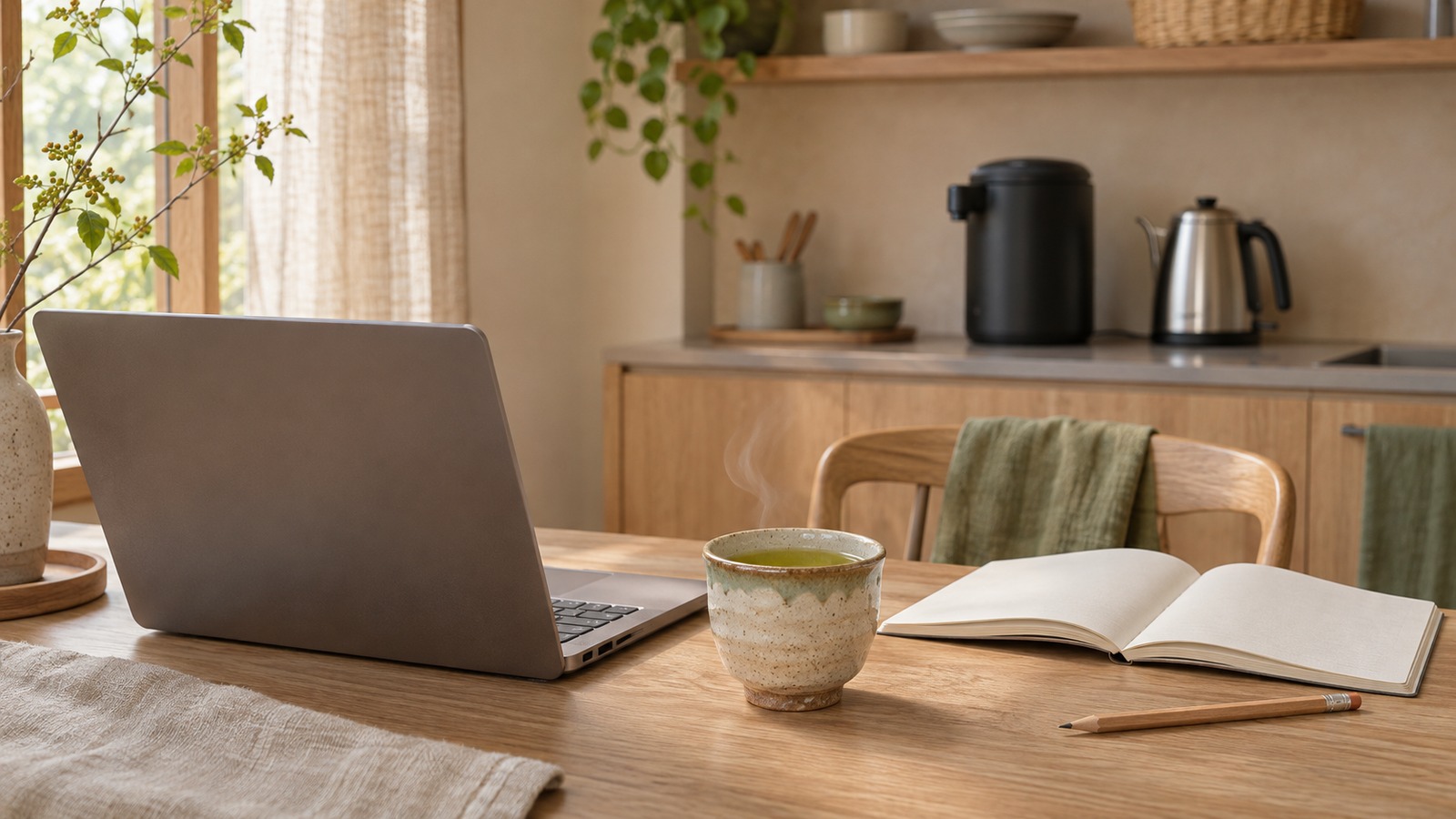
Illustrative mood image (AI-generated).
Two moments are where this matters most. During work-from-home days, a cup of tea or a pour-over becomes a thirty-second break instead of a ten-minute detour to the kitchen. And for a morning warm water ritual, a plain cup of hot water that many people in Japan start the day with, the water is simply there when you wake up.
If you drink one cup a day, a kettle and a little patience are enough, and you do not need anything on this page. If hot drinks are spread through your whole day, the picks below are built for exactly that.
Two honest downsides first
Countertop footprint. A water boiler lives on your counter permanently and stands about 13-1/2 inches tall. Measure the space under your upper cabinets, and leave room above for steam and for opening the lid to refill.
Periodic citric acid descaling. Because water is held hot for hours, mineral scale builds up inside, faster with hard water. The manufacturer's routine is a cleaning cycle with citric acid from time to time. It is easy, but it is not optional.
A boiler also draws power to stay hot. Both electric picks below include an energy-saving timer that can be set from 6 to 10 hours, so the unit rests overnight and is ready again by morning.
How we chose
We are an editorial team based in Japan, where an electric water boiler is an ordinary kitchen appliance and cast iron kettles from Iwate have been made for centuries. We selected three pieces by reading the manufacturers' published specifications carefully and sorting out the terminology that English-language guides often blur. This is a specification-based guide, not a hands-on lab test, and we say so wherever something could not be confirmed.
Unlined Nambu ironware that can boil water and steep tea
Gas flame only. Not induction compatible. Needs drying after every use
Prices and availability change often, so we link to the live Amazon listing instead of quoting a number.
The three picks in detail
Best for busy households
Zojirushi CD-NAC50BM Micom Water Boiler & Warmer, 5.0 L
The all-day station. Five liters (169 oz) of water held at the temperature you choose, enough for a household where tea, coffee, instant soups and warm water are poured from morning to night.
Why it stands out
Four keep-warm settings: 160°F, 175°F, 195°F and 208°F, which covers everything in the temperature guide above.
Quick Temp mode heats to 160°F, 175°F or 195°F without boiling first, so green-tea water is ready sooner.
The display shows the actual water temperature at all times, so there is no guessing.
Energy-saving timer (6 to 10 hours) and auto shut-off that prevents boiling dry.
Listed by the manufacturer as made in Japan.
Who it suits
Families, shared homes, and anyone working from home who makes several hot drinks a day and has guests often enough that a kettle always feels too small.
What to know before buying
It needs a permanent spot of roughly 9-1/8 inches wide by 12-1/2 inches deep, and it stands 13-1/2 inches tall. Plan on periodic citric acid descaling. If you live alone and drink two cups a day, five liters is more than you need.
Zojirushi CD-WHC40XH Micom Water Boiler & Warmer, 4.0 L
The same temperature control in a slimmer body. Four liters (135 oz) is still far more than a kettle holds, and it is plenty for one or two people through a full workday.
Why it stands out
The same four keep-warm settings: 160°F, 175°F, 195°F and 208°F.
Quick Temp mode reaches 160°F, 175°F or 195°F without a full boil.
A smaller base: about 8-1/4 inches wide by 11-1/4 inches deep.
Uncoated stainless steel interior, per the manufacturer.
Energy-saving timer (6 to 10 hours) and auto shut-off that prevents boiling dry.
Who it suits
Couples, apartment kitchens, and a home café corner where every inch of counter is already spoken for by a grinder and a dripper.
What to know before buying
It is narrower and shallower than the 5.0 L model, but it is the same 13-1/2 inches tall, so it will not fit under a cabinet that the larger one cannot. The temperature settings are identical, so choose between the two on capacity and counter space, not on features. Periodic citric acid descaling applies here too.
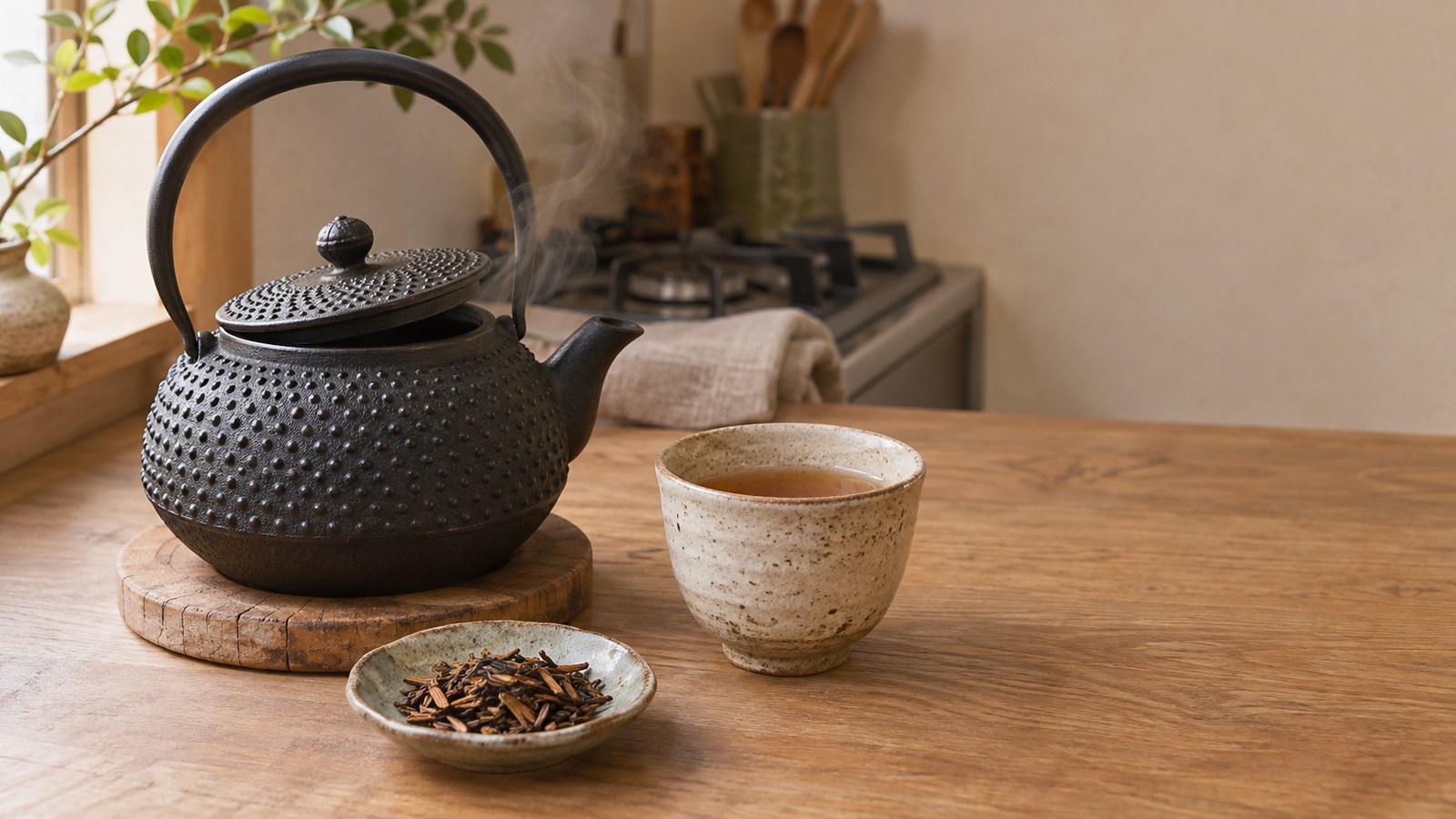
Illustrative mood image (AI-generated). Not a photo of the products on this page.
Tetsubin vs. cast iron teapot: the difference most guides get wrong
Many buying guides use “tetsubin” for any Japanese cast iron pot. In Japan these are different tools, and confusing them can ruin one.
Type
Inside
On direct heat?
Used for
Tetsubin (iron kettle)
Bare iron, no enamel
Yes
Boiling water
Tetsu-kyusu (cast iron teapot)
Enamel lined
No. Heat can damage the enamel
Steeping tea with water heated elsewhere
Kettle-teapot (tetsubin-kenyo-kyusu)
No enamel, with a removable strainer
Yes
Both: boil the water, then steep in the same pot
The third pick below belongs to that last group. Before you buy any cast iron pot, check which of the three it is. If the listing mentions an enamel interior, do not put it on a burner.
Best for the slow ritual
Iwachu 11884 Cast Iron Kettle-Teapot, “New Arare” pattern, 0.8 L
Nambu ironware from Iwachu, a long-established foundry in Morioka, Iwate. This is the opposite of an appliance: a small, heavy, hand-finished pot for the weekend cup you make on purpose.
Check your stove before anything else.
This kettle is for a gas flame only. It is not induction compatible. We could not confirm whether it is suitable for electric coil or glass-top radiant ranges, so if you do not cook on gas, treat it as not for your kitchen unless the seller confirms otherwise.
Why it stands out
No enamel inside. The listing describes a baked black finish inside and out, which is what allows it to go on a flame.
Works two ways: heat water in it, or drop in the included stainless steel strainer and steep tea directly.
The raised “arare” (hailstone) pattern is the classic Nambu ironware design.
Listed as made in Japan.
Who it suits
Someone with a gas range who already owns a way to make everyday hot water and wants a beautiful object and a slower ritual for hojicha, sencha or a pot shared between two.
What to know before buying
It holds about 0.8 liters (roughly 27 fl oz), so it is a small pot, not a family kettle. Cast iron is heavy and the handle and lid get hot. There is no thermostat: for green tea you still let the water cool to 160–175°F (70–80°C) before steeping. It also asks for care after every use, described below.
How cast iron kettles are generally cared for in Japan
Use a low to medium flame, never high heat, and never heat it empty.
After use, pour out all the water while the pot is still hot and leave the lid off so the remaining heat dries the inside completely.
Do not wash the inside with detergent and do not scrub it. Rinse with water only.
Reddish spots or a pale mineral film inside are normal with use. The maker's guidance is to leave them alone rather than scrape them off.
Do not leave water or tea sitting in it overnight.
Always follow the care sheet that comes with your own kettle if it differs.
Opens Amazon.com in a new tab (paid link). Confirm capacity and heat source on the listing before ordering.
Which one should you choose?
Hot drinks all day, three or more people, frequent guests: the 5.0 L water boiler.
One or two people, a tight counter, a home café corner: the 4.0 L water boiler.
You cook on gas and want the ritual more than the convenience: the cast iron kettle-teapot, ideally alongside whatever you already use for everyday water.
One cup a day: keep your kettle, and simply let the water cool for a few minutes before it touches green tea.
About this guide
Koto Home Lab is a small editorial team based in Japan. We write about everyday Japanese household tools for readers abroad, with an emphasis on getting the terminology and the specifications right. Product details here come from the manufacturers' published information and the product listings, checked on the date above. We have not lab-tested these items, and the images on this page are AI-generated illustrations, not product photographs.